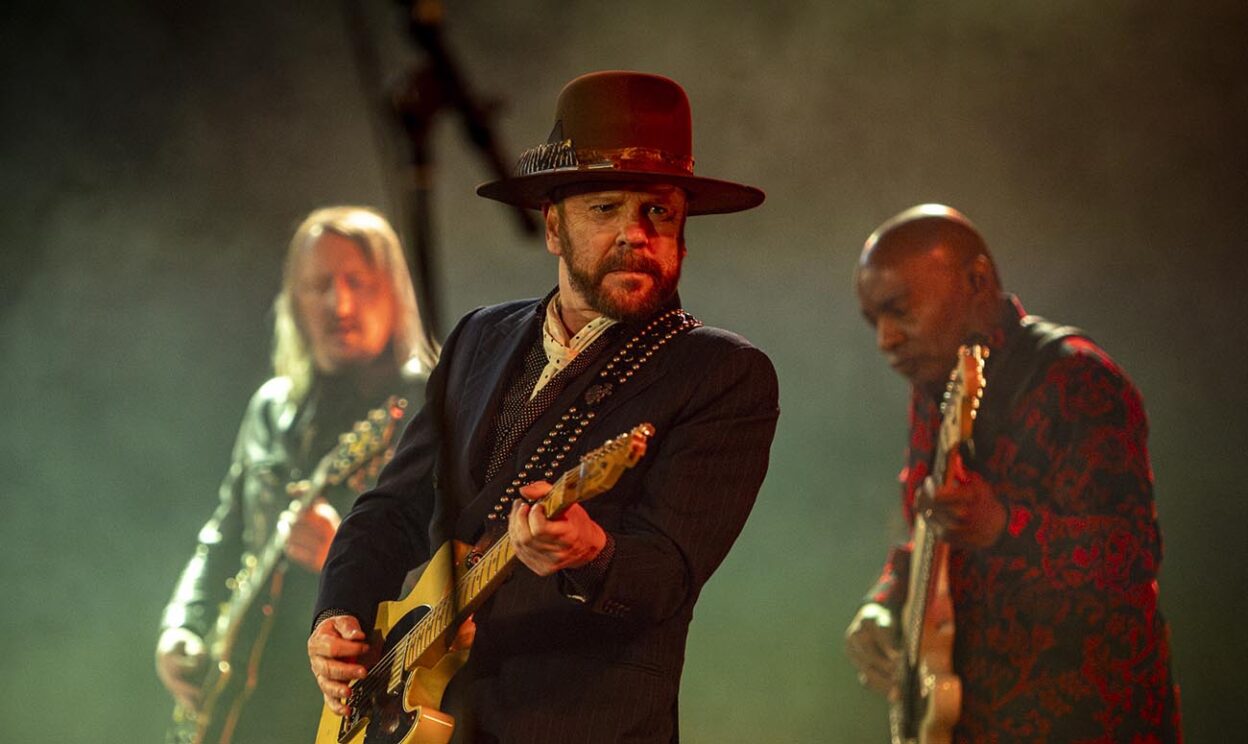
Kiefer Sutherland may be known across the world as an actor and producer, but on stage at Union Chapel, that part of his life felt almost beside the point. With his fourth album, Grey, due at the end of May, Sutherland arrived not as a celebrity trying his hand at music, but as a proper country storyteller with songs rooted in loss, movement, memory and hard-won reflection.
Before Sutherland took to the stage, Irish singer-songwriter Colin Andrew opened the evening with a warm, engaging set that blended traditional folk with country-leaning songwriting. His outgoing personality immediately connected with the room, but it was the thoughtful, contemplative lyrics that gave the performance its weight — from the line “it’s only pain holding me back” in “One Way Down” to the poignant “Corfu”, a song made all the more striking by Andrew admitting he had never actually been there. His cover of the Scottish folk song “Go Lassie Go” had the Union Chapel audience singing and clapping along, setting the tone beautifully for the night ahead.
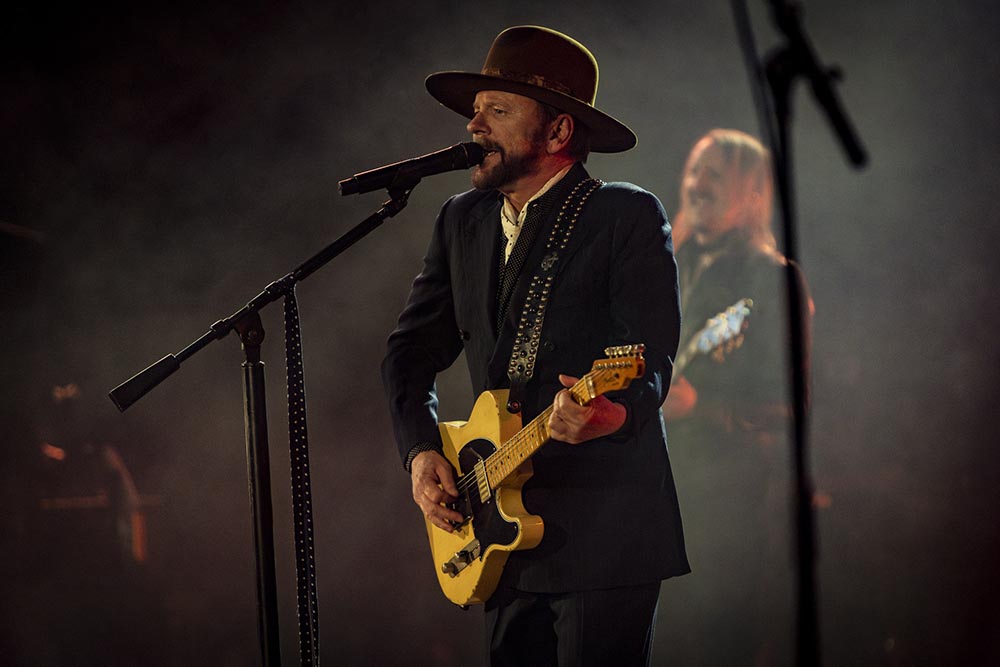
Then, with a full beard, cowboy hat and a five-piece band behind him, Kiefer Sutherland walked onto the Union Chapel stage. New song “Down Below” opened the set before the band delivered a superb country reinvention of Garbage’s “Only Happy When It Rains” — a version so natural in this setting it felt less like a cover and more like the song had been riding across dust roads all along.
Despite much of the set being built around new material, the songs connected quickly and deeply with the room. “Goodbye California” found Sutherland reflecting on leaving the Golden State after 35 years to settle on farmland on the East Coast. Musically, it carried a country-rock warmth with shades of R.E.M. in its atmosphere, while lyrically it spoke to change, escape and the strange ache of starting again.
That move east has also brought Sutherland closer to the struggles facing independent American farmers — a subject long championed by Willie Nelson, John Mellencamp and Neil Young through Farm Aid. Sutherland’s own “American Farmer” carried that same sense of dignity and hardship, painting rural struggle with the kind of stark humanity you might find in Steinbeck.
One of the most affecting moments came with “Come Back Down”, one of Sutherland’s favourite new songs. Built around a haunting, dustbowl atmosphere, it was lifted by the devastating line: “All the things that used to free you have gone…” It left Union Chapel not just entertained, but caught in a quiet, philosophical swirl.
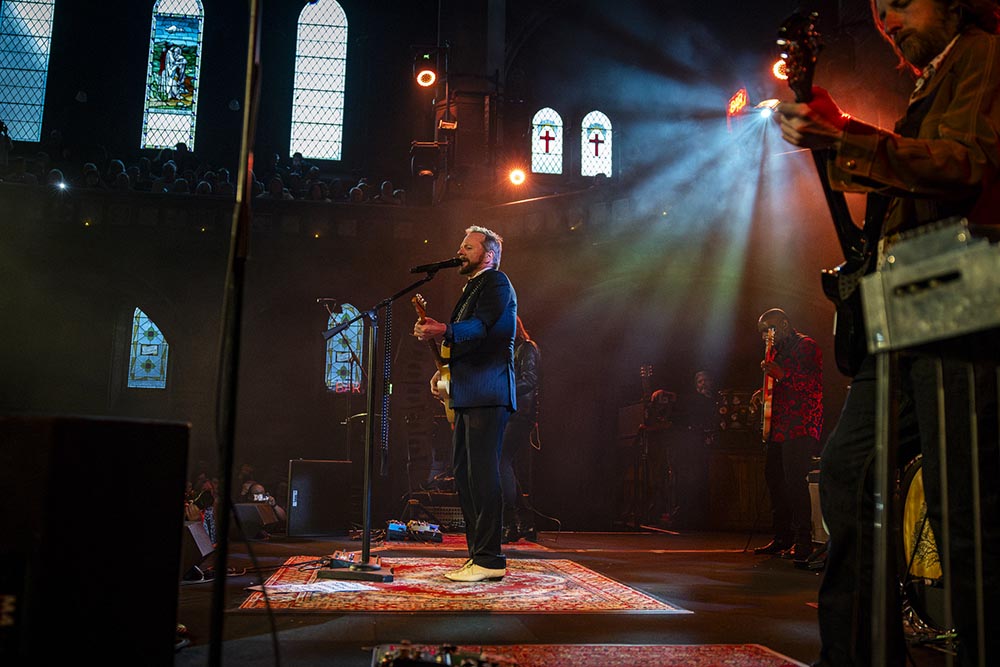
“See You on the Other Side” was handled with real humility, carried by a delicate, drifting electric guitar line, while Phil Collins’ “In the Air Tonight” was given a darker country-rock overhaul without losing the weight of that unmistakable drum moment.
“Down in a Hole”, the title track from Sutherland’s debut album, brought a bigger, stadium-rock energy to the Union Chapel setting. Even when the tempo unexpectedly surged, the shifts in key and speed kept the song feeling alive and unpredictable. Nearly ten years on, it still sounded fresh. The same could be said for the high-BPM rush of “This Is How It’s Done”, a song that deserves to sit proudly alongside road-worn country classics like Geoff Mack’s “I’ve Been Everywhere”.
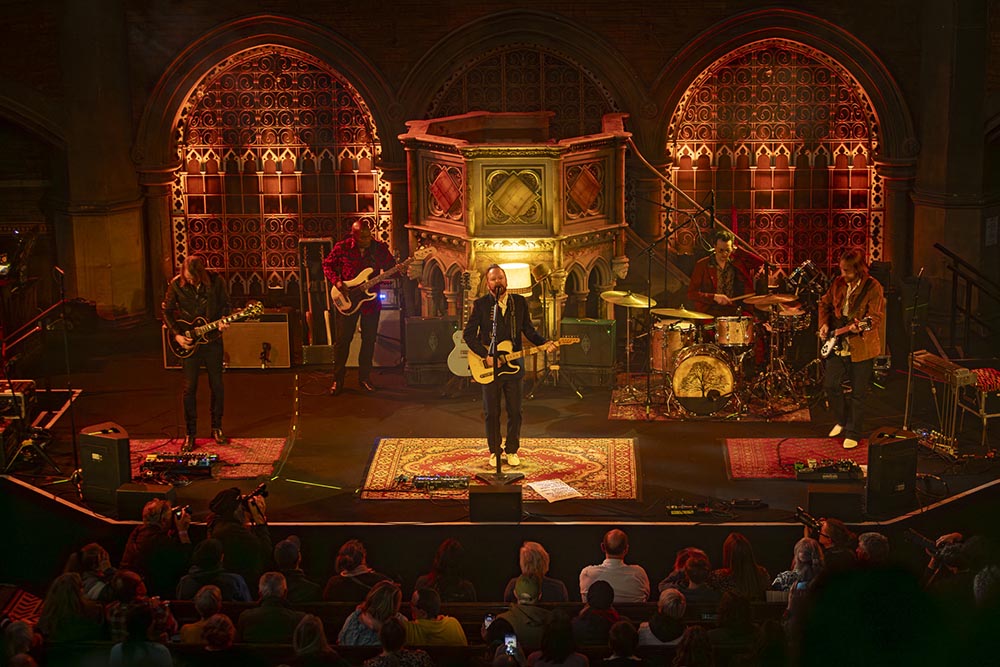
Sutherland wisely slowed things down to close the set with the new song “Starlight”, leaving an ecstatic and genuinely moved audience behind him. This was not about fame crossing into music. It was about a reflective singer-songwriter using country music as a way to make sense of change, distance, hardship and hope.
At Union Chapel, Kiefer Sutherland more than proved he belongs in this world. He honoured the room, honoured the songs, and honoured country music itself.


Be the first to comment