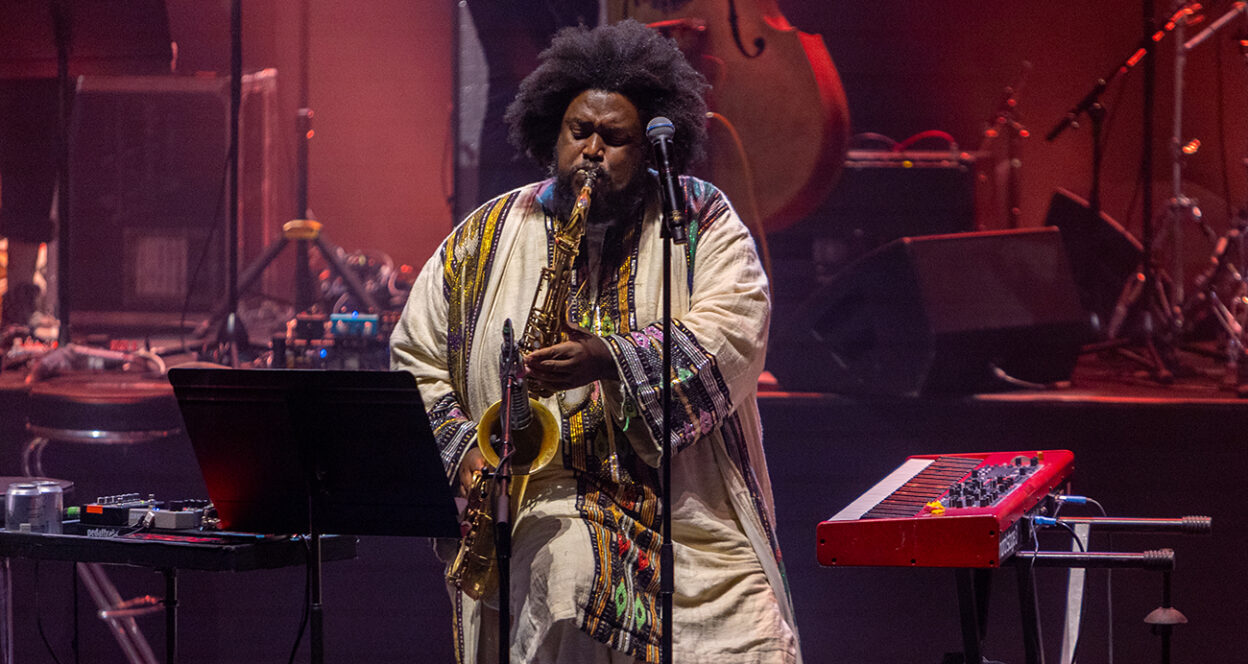
It has been a significant year for the Southbank Centre, which recently received a £10 million grant as part of its 75th birthday celebrations. Adding to that sense of occasion, Harry Styles was announced as curator for the 31st edition of Meltdown, the world’s longest-running artist-curated music festival.
Across the eleven-day programme, Styles booked tenor saxophonist, composer and bandleader Kamasi Washington for two performances: one celebrating former jazz greats, and another focused more heavily on Washington’s own material, including music from his latest album, Fearless Movement, which features Thundercat and André 3000. XS Noize caught Washington at the latter show.
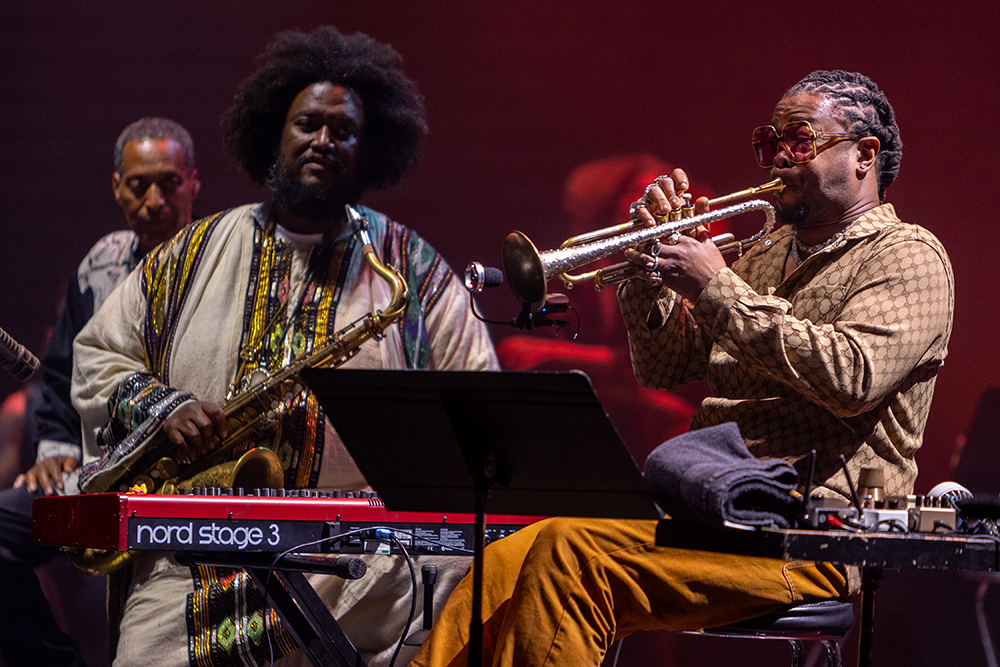
Washington opened with “Lesanu,” the same track that begins Fearless Movement. The piece started life as a devotional song of praise before the various strands of jazz gradually coalesced to fill and enchant the 2,700-capacity Royal Festival Hall. Particularly effective were the magnificent piano and saxophone solos from Cameron Graves and Rickey Washington, Kamasi’s father. These moments never felt like technical showcases for their own sake. Instead, they deepened the song’s emotional and spiritual core.
Another Fearless Movement highlight was the tranquil, dreamlike “Together.” Co-written by trombonist Ryan Porter, Washington’s longtime collaborator in the West Coast Get Down collective, the song carried extra weight following Porter’s recent death. Patrice Quinn’s delivery of the line “Rue the days you would gain if we stayed” sat beautifully within a soundscape that felt more classical than experimental, turning the performance into something quietly elegiac.
Washington also spoke fondly about growing up playing Street Fighter, a childhood love that inspired “Street Fighter Mas.” There may not have been a single “Hadouken,” but the track was anything but a gentle or nostalgic detour. Instead, it moved through Herbie Hancock-style funk and bass-driven momentum, with Maurice Brown delivering rapturous trumpet blasts while Miles Mosley did for the upright bass what Hendrix did for the guitar.
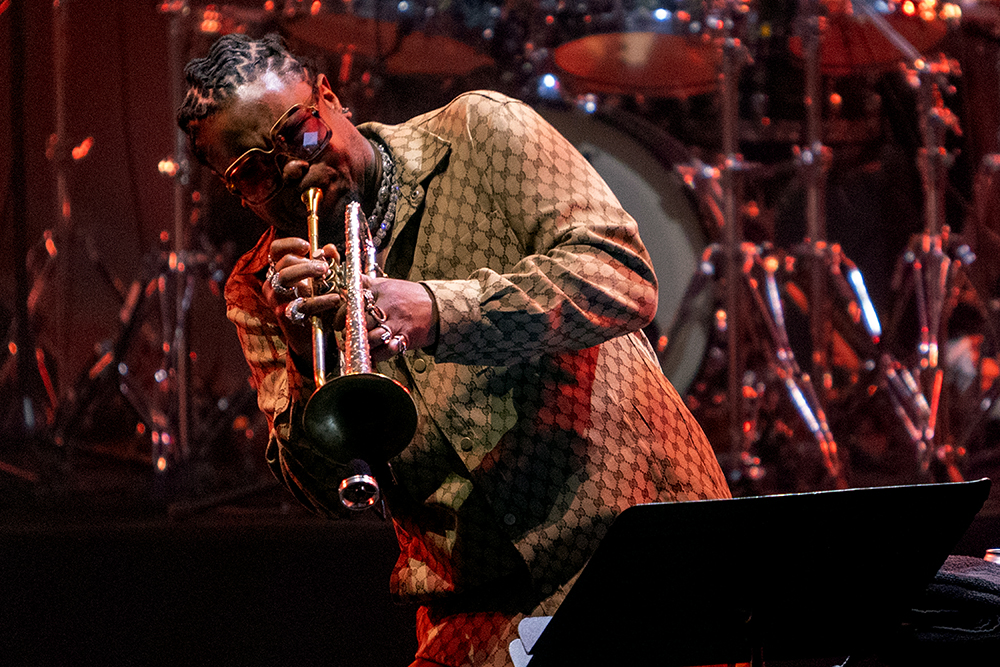
Washington’s cover of choice, “Prologue,” came not from a jazz artist but from Argentine nuevo tango composer, bandoneon player and arranger Astor Piazzolla. In Washington’s hands, the piece was reworked with increased tempo, Afro-futurist textures and bright jazz trumpet flourishes. Later, unexpected bursts of funk locked perfectly into the arrangement, adding another layer of surprise and audience enchantment.
The set concluded with “Truth,” from Washington’s Harmony of Difference EP. Beginning slowly, calmly and with great restraint, the piece gradually rose into a beautiful crescendo, the full ensemble sound creating something close to a heavenly aura.
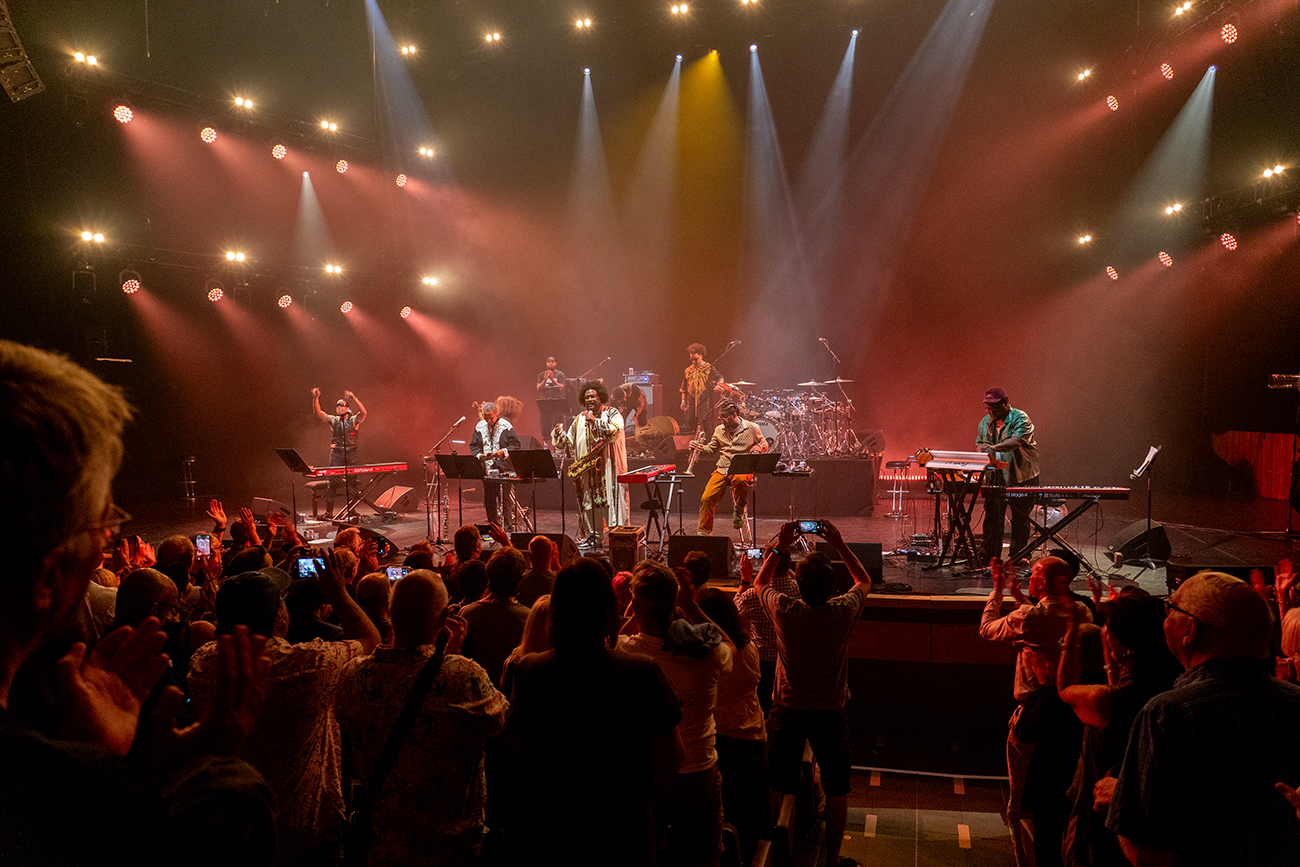
Many live artists are judged by how quickly they can get an audience standing, singing and dancing, and how long they can keep that energy alive. Kamasi Washington has to be judged differently. From the outset, the Royal Festival Hall sat in a state of mesmerised, ecstatic stillness, broken only when each piece reached its conclusion and the room responded with passionate, deserved applause.
Washington’s performance will undoubtedly stand as one of the highlights of the 31st edition of Meltdown. Harry Styles, already established as a successful solo artist and impressive marathon runner, can now add thoughtful festival curator to his list of achievements.


Be the first to comment