There has been a flurry of solo activity from the members of Radiohead in the ten years since A Moon Shaped Pool was released. In that same decade, the world has faced its share of challenges: war, disease and unrest.
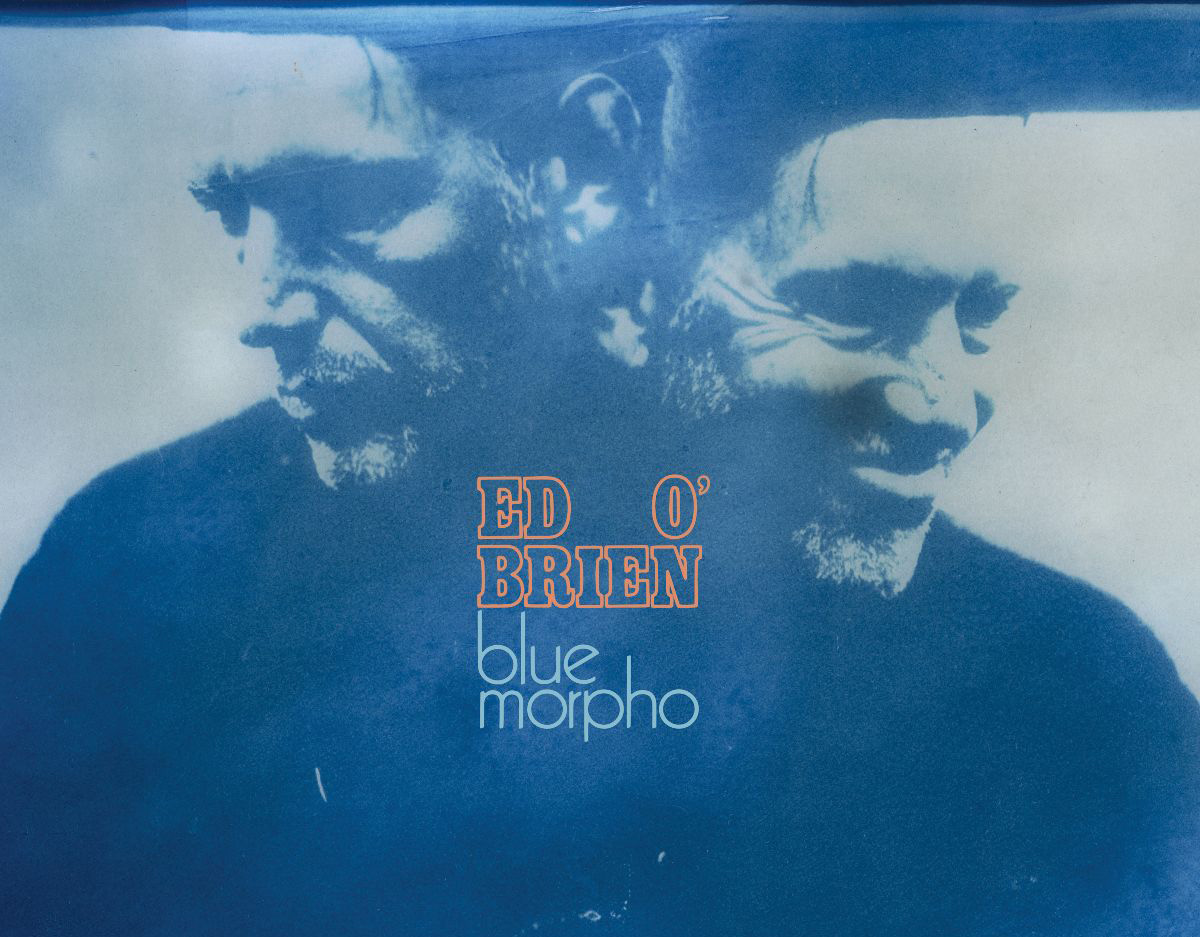
During this period, Radiohead guitarist Ed O’Brien has released two solo works, the first being Earth in 2020. That album was best characterised as a celebratory outing, influenced by his time living in Brazil. His new offering, Blue Morpho, is much darker and more personal.
The album reflects O’Brien’s struggles with deep depression, which coincided with the beginning of Covid’s rampage. Sonically, O’Brien offers a unique combination of hypnotic psychedelic folk, trip-hop textures and radiant guitars.
Blue Morpho was inspired by one of the most challenging periods of O’Brien’s life. As depression settled upon him, he realised it was not only the global catastrophe he was reacting to, but also fifty years of suppressed emotional trauma that had thrown him into such deep sadness. The only way out was to confront those demons. Blue Morpho is a reflection of that journey.
The album itself seems to have fallen into place naturally, with chance meetings helping to shape its creation. A Glastonbury visit brought Shabaka Hutchings in as flautist, while a chance school outing connected O’Brien with producer Paul Epworth, known for his work with Adele and Paul McCartney. In Estonia, O’Brien bonded with composer Tõnu Kõrvits, who arranged the strings for the Tallinn Chamber Orchestra’s contribution to the album. These collaborators, along with featured musicians Dave Okumu on guitar, percussionist Crispin Robinson, keyboardist Nick Ramm and O’Brien’s Radiohead cohort Phil Selway on drums, provide the musical foundation for O’Brien’s creation.
Blue Morpho begins with “Incantations”, a beguiling, cinematic folk offering. Here, O’Brien seems to want to run away from the melancholy of yesteryear, looking at the paradox of pain and memory. That feeling is beautifully expressed in the lyric, “A love supreme that never was and ever will be.” It is a great opening track, making a clear statement about where the album is heading.
The eponymous track, “Blue Morpho”, emanates a floating pop vibe, reminiscent of the work of Kate Bush and Neil Finn. Lush strings and nature sounds fill the song, which explores how life can take us away from the beauty of nature — the ultimate healer. “Sweet Spot” continues that theme, conveying how we strive to reach that perfect place: a happy, safe space.
Just when you think the entire outing will remain a folk-filled affair, O’Brien surprises the listener with “Teachers” and its discothèque vibe. It blends trip-hop, Afro-pop and cranking guitar into a fantastic track.
“Solfeggio” and “Thin Places” are both brief instrumental pieces. “Solfeggio” contains heavy synths, a thick slab of techno and otherworldly glossolalia as it drifts along. “Thin Places” has a Radiohead “Treefingers” kind of atmosphere, with shimmering sonics and delightful flutes.
The final track, “Obrigado” — Portuguese for “thank you” — has a sun-dappled world music feel. It seems to thank the Supreme Being for the things that make life rich and worth the journey. It is O’Brien coming out of the depths and into the sunlight. There is a noteworthy long guitar outro, very Pink Floyd-esque, as the song ends in a glorious, cathedral-like crescendo.
With Blue Morpho, Ed O’Brien shows he is not afraid to step into the dark and emerge with new approaches and hard-earned wisdom. He plays through the process of confronting his past while offering the possibility of healing. He credits nature as a spiritual connection that restores and renews. Blue Morpho is an engaging album that enchants the listener.




Be the first to comment