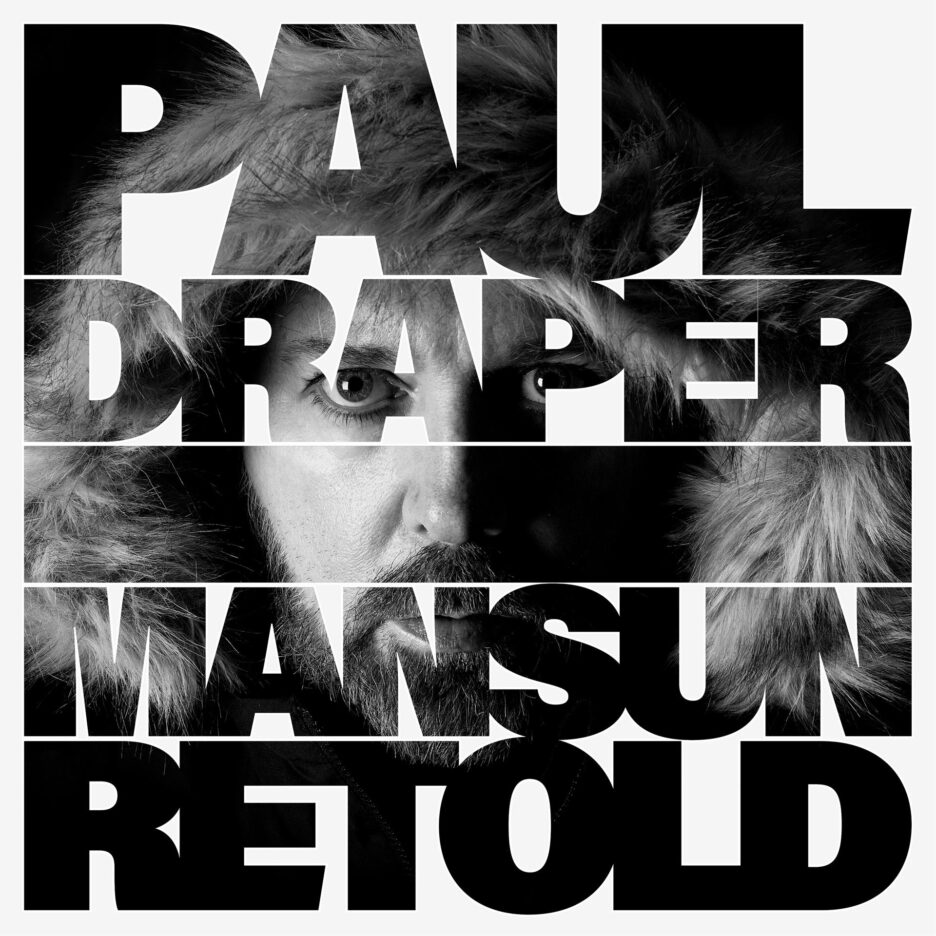
Three decades have passed since Mansun first injected a dose of grand, prog-inflected eccentricity into the waning days of Britpop. In 2026, ex-frontman Paul Draper returns with Mansun Retold, a project that resists the easy pull of nostalgia.
This is no mere “cash-in” or “best of” compilation; rather, Draper has returned to The Loft Studios in Surrey to dismantle 11 of his most powerful compositions and rebuild them from the ground up.
Co-produced with Paul “PDub” Walton (The Cure, U2, Björk, Massive Attack, Oasis) and featuring the lush, cinematic string arrangements of Audrey Riley (Muse, Coldplay, Nick Cave), the album is a sonically ambitious dialogue between Draper’s past and present.
What is immediately striking is that these tracks – some of which are 30 years old – remain startlingly relevant. In an era of bite-sized digital pop, the architectural complexity of Draper’s songwriting still stands tall. Furthermore, his voice remains remarkably strong. Hitting those signature, soaring high notes without a hint of strain, Draper proves he hasn’t lost the “lovely voice” he once self-deprecatingly sang about.
The journey begins with “I’ve Seen The Top Of The Mountain”, where the original’s frantic energy is traded for a gritty, cinematic atmosphere. “Disgusting” follows, sounding more visceral and vulnerable in its unplugged state and is apparently closer to way Draper wanted it to originally sound, while “I Can Only Disappoint U” is transformed from a polished radio anthem into a moving, starkly honest confessional.
The mid-album stretch offers some of the most profound reinterpretations. “Until The Next Life” highly benefits from an orchestral stripped back retelling. Reimagined as a fragile and haunting piano-led piece that puts Draper’s emotional range front and centre. “Naked Twister” retains its quirky, serrated edge even without the electric wall of sound, leading into “The Chad Who Loved Me”. Once a grand orchestral statement, it is now a brooding, intimate masterpiece driven by Riley’s sweeping strings and Draper’s own acoustic bass work.
“Wide Open Space”, perhaps the most iconic track here, avoids being a tired cover by leaning into an eerie, expansive folk-noir vibe. This flows perfectly into the nearly seven-minute “Dark Mavis”, a centrepiece of ‘eerie calm’ that feels like a resolution of unfinished business.
“Comes As No Surprise” is transformed here. By trading the original’s heavy percussion and distorted chorus for an ethereal orchestral arrangement, Draper elevates the track into something far more haunting. This modern, stripped-back reimagining isn’t just a fresh take; it arguably surpasses the 2000 original.
“Mansun’s Only Love Song” benefit immensely from the presence of early-era Mansun drummer Julian Fenton, whose rhythmic precision bridges the gap between the band’s 1990s origins and this modern take. Finally, “When The Wind Blows” brings the record to a close. It is a poignant, reflective end to a collection that sees Draper not just playing old songs, but truly inhabiting them again.




This surely must be a joke. I can only conclude that you received and reviewed a completely different album that the one received by the rest of us, who seem to have got a turgid karaoke version of Mansun sang by somebody whose voice is long past best and his being heavily treated with auto tune to make it…mediocre. The production is clunky and cluttered, the drummer appears to have only one working arm, and whoever mixed it listens to their TV on max because the are obviously deaf.
This isn’t a case of slightly differing opinion- this is an objectively terrible record that anybody who has even a modicum of knowledge (anybody with ears) of music can confirm is ill conceived, badly made and badly mixed.