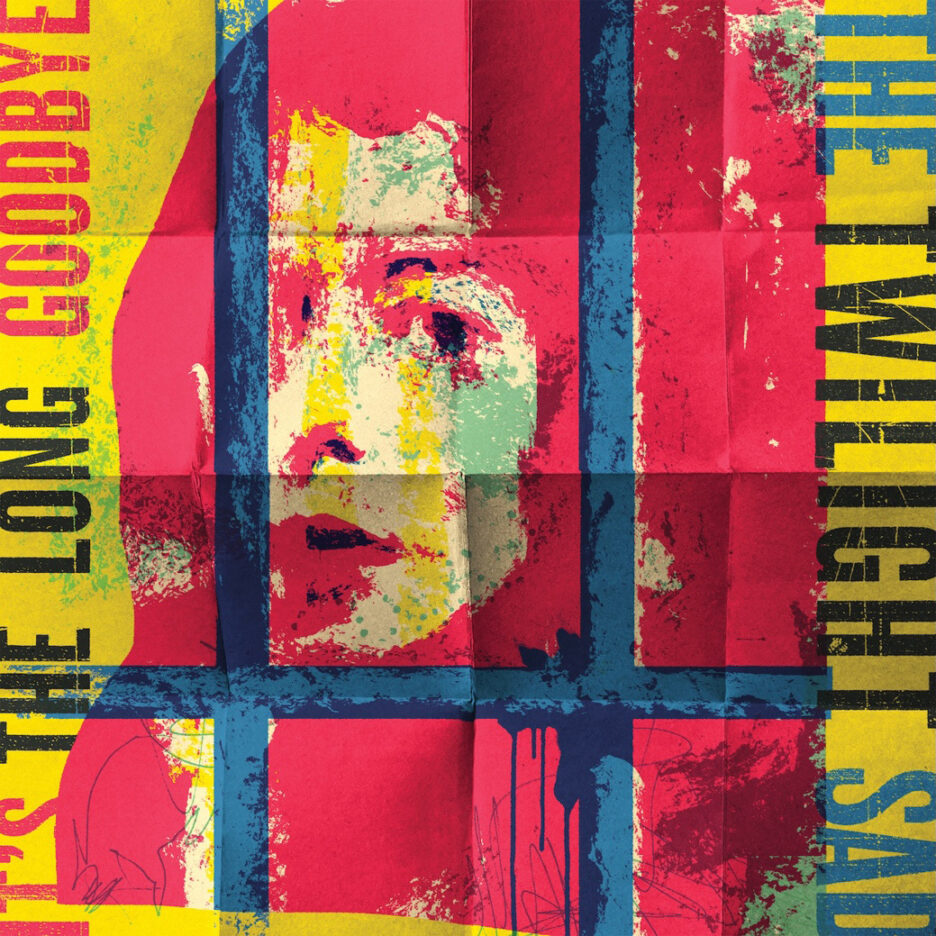
It’s been seven years since The Twilight Sad released It Won’t Be Like This All the Time — a record that cemented their place as one of the most emotionally direct and sonically powerful bands around. In that time, the world has shifted in every possible way. But for frontman James Graham, the most profound change was deeply personal.
The diagnosis of his mother with early onset dementia — and her eventual passing — sits at the heart of It’s The Long Goodbye. This isn’t just an influence on the album; it’s the emotional core of it. Every song feels shaped by that experience — the confusion, the grief, the slow, painful process of letting go.
Musically, the band haven’t stood still. While the DNA is still unmistakably theirs, there’s a sense of control and purpose here that feels more refined than ever. Andy MacFarlane built much of the record from ideas developed during lockdown, sending sketches back and forth with Graham before the band came together to record. With additional input from Robert Smith — who contributes to several tracks — the album carries a subtle expansion of their sound without losing what makes them unique.
Opening track “Get Away From It” sets the tone immediately. Waves of guitar build into something overwhelming, mirroring the emotional weight of the lyrics. Graham’s voice sits right at the centre of it all — raw, exposed, and impossible to ignore — as he begins to process the reality of his mother’s condition.
“Designed to Lose” brings a different kind of energy, driven by a huge bassline and a sense of forward motion that cuts through the heaviness. It’s one of the album’s most immediate moments, but the tension underneath never lets up.
“Waiting for the Phone” captures something very specific — that dread of knowing bad news is coming, but not knowing when. The production leans into that unease, with pulsing rhythms and dense layers creating a constant sense of pressure.
Later, “Inhospitable/Hospital” is one of the most difficult listens on the record. It deals with the moment where acceptance begins to creep in — when the person you knew is no longer really there. It’s handled with restraint, which only makes it hit harder.
By the time the album reaches “Back to Fourteen” and the closing track “TV People Still Throwing TV’s at People”, there’s a shift. Not towards resolution exactly, but towards something closer to acceptance. The noise builds, the emotion peaks, and the album finds its release without ever offering easy answers.
Throughout, you can hear echoes of bands like Mogwai and Frightened Rabbit, alongside the shadow of The Cure — but none of it feels derivative. This is still unmistakably The Twilight Sad, just operating at a deeper level.
Six albums in, they’ve delivered something that feels both intensely personal and completely universal. It’s The Long Goodbye doesn’t try to dress anything up or soften the edges. It sits with the reality of loss and lets it unfold in its own time.
It was worth the wait.



Be the first to comment